The grave of Nobutsuna Matsudaira and his wife © Kinpozan Heirinji
Not far from RIKEN, you can visit Heirinji Temple in Niiza City, Saitama Prefecture. This temple is the bodaiji (family temple) of Nobutsuna Matsudaira, a past lord of Kawagoe Domain and ancestor of RIKEN’s third president, Masatoshi Ōkōchi. Located on the temple’s grounds is the Ōkōchi family grave. Recently I visited the temple, and it got me thinking about these two men, their similar attitudes, and how they influenced Japanese society and RIKEN.
Topics:

Topics:
Currently, RIKEN is a national research institute in Japan, but it was originally founded as a private research foundation in 1917, called the RIKEN Foundation. In 1921, Masatoshi Ōkōchi (1878–1952) became its third president , and for over 25 years greatly contributed to both the development of RIKEN and the modernization of Japan’s efforts in science and technology. He adhered to the principle of pursuing academic research and applying it to society. It’s nice to think that this principle ran in his family.
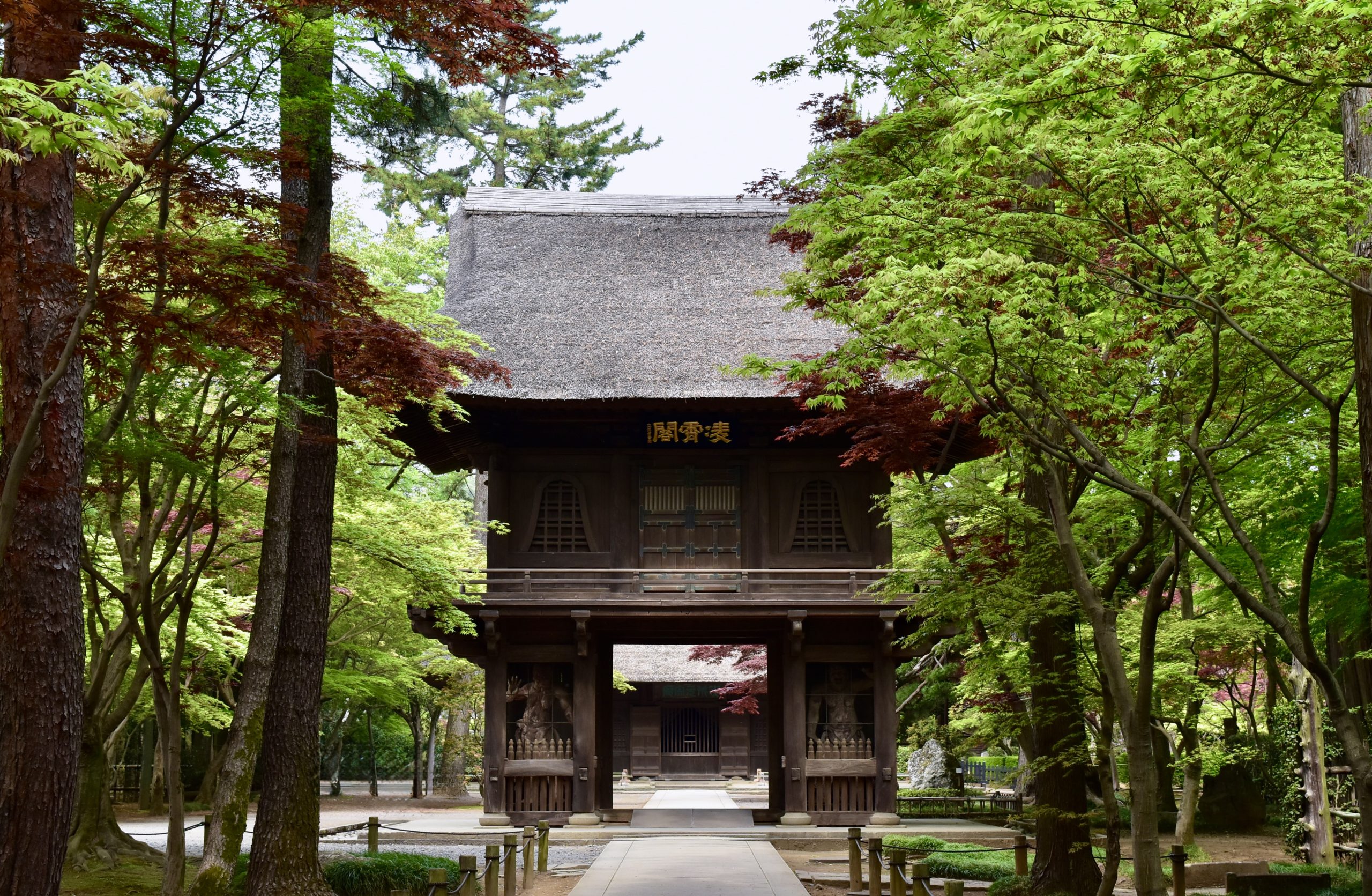
Sanmon Gate of Heirinji Temple © Kinpozan Heirinji
Nobutsuna Matsudaira (1596–1662), known as Izu-no-Kami Nobutsuna, was a fudal daimyo (hereditary vassal lord) in the early Edo period and an excellent politician who was active in the core of the Tokugawa shogunate. When he succeeded his father Masatsuna Matsudaira as the lord of Kawagoe Domain, he became the governor of territories worth more than 100,000 koku, or 15 million kilograms of rice. Serving under the third shogun Iemitsu Tokugawa and the fourth shogun Ietsuna Tokugawa, he led the shogunate government as an elder (roju), earning the nickname “Chie Izu” (Wise Izu) for his strategic brilliance.
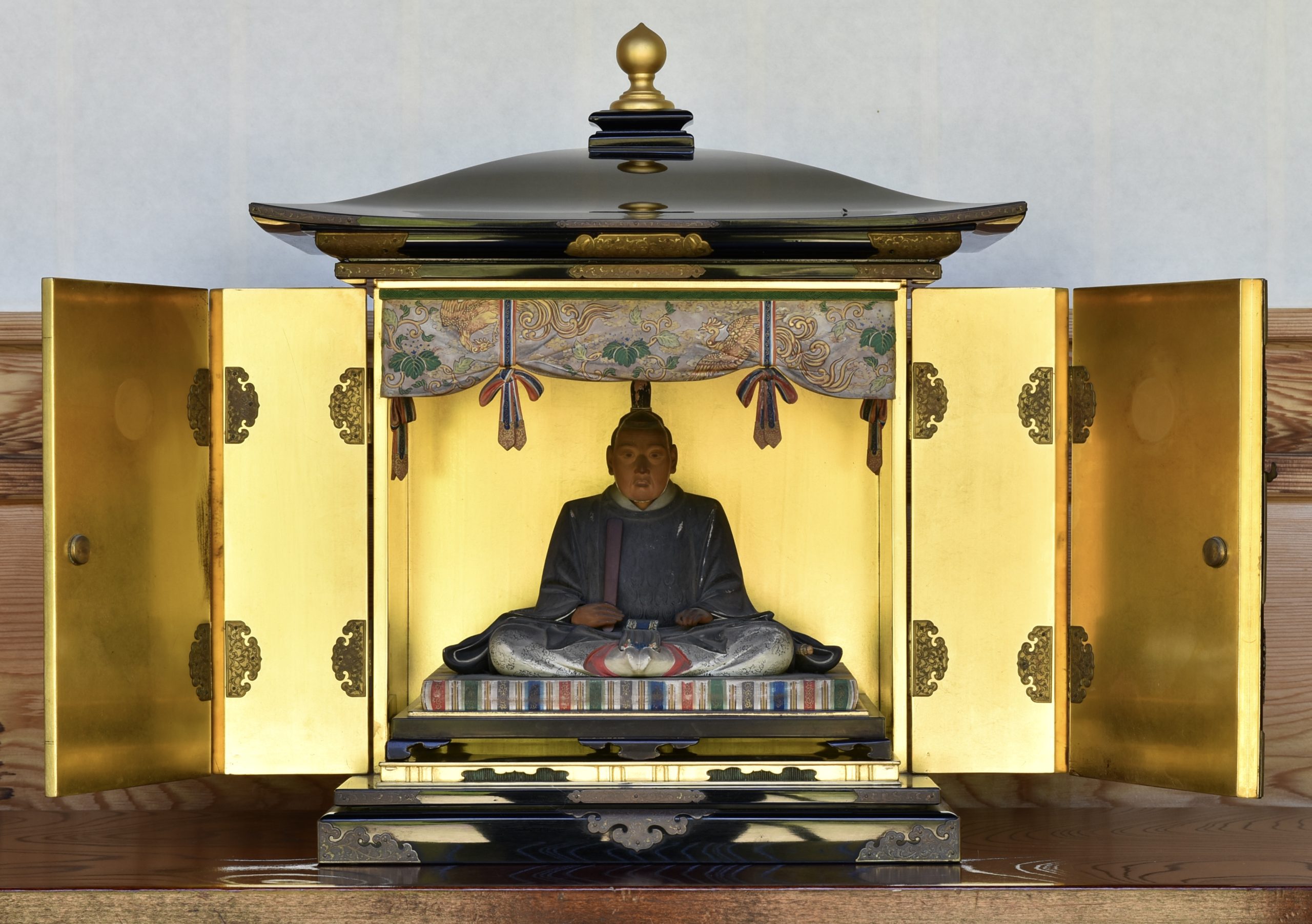
The seated statue of Nobutsuna Matsudaira, known as “Chie Izu” (Wise Izu). © Kinpozan Heirinji
Nobutsuna devoted his efforts to flood control and agricultural development. One of his most famous projects was the construction of the Nobidome Aqueduct Irrigation Canal, which diverted water from the Tamagawa Aqueduct and irrigated the Kawagoe domain. The canal flows through present-day Higashikurume City in Tokyo and Niiza City. It was completed around 1655 with the cooperation of the shogunate via Nobutsuna’s command. The Nobidome Canal was not only important as a conduit for agricultural water but contributed greatly to the development of new rice fields and regional growth in the suburbs of Edo.
Here’s another episode. There was a high-ranking Buddhist monk named Tenkai, who served as the 27th head priest of Kita-in Temple, a Tendai Buddhist temple located in Kawagoe. He acted as a political advisor to the Tokugawa shogunate, serving three successive shoguns: Tokugawa Ieyasu, Hidetada, and Iemitsu. The Tokugawa family greatly relied on him. In 1638, when Kita-in was destroyed by a fire, Tokugawa Iemitsu ordered that part of Edo Castle be relocated to Kita-in to aid in its swift reconstruction. This order was carried out by Nobutsuna, Iemitsu’s right-hand man.
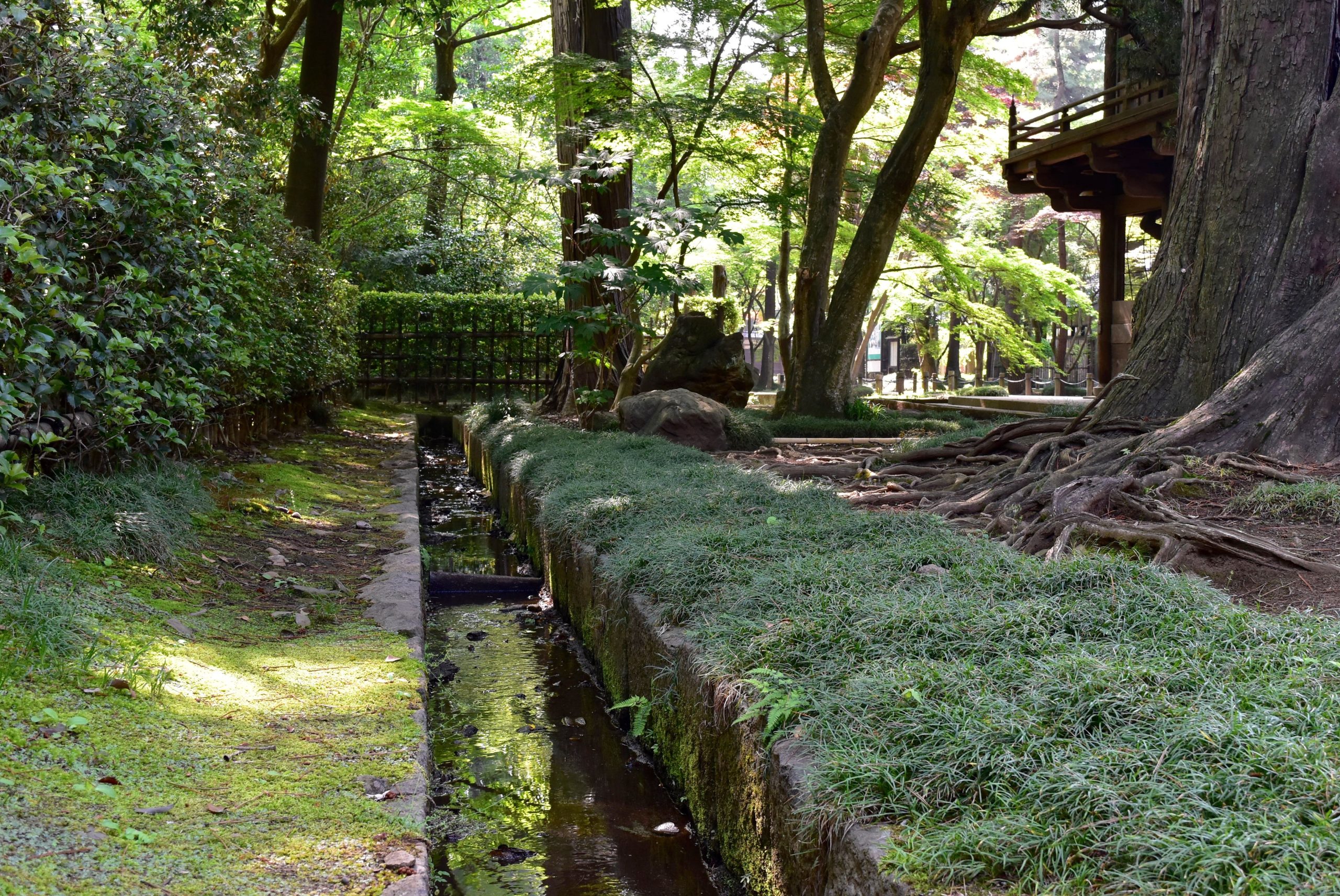
Nobidome Yosui (Aqueduct) Irrigation Canal © Kinpozan Heirinji
At that time, it was not possible to transport large timber over land, so the Shin-Kashi River was built up to raise its water level, allowing the materials to be transported by boat. This event marked the beginning of active river transportation between Kawagoe and Edo, facilitating the movement of people and goods. Kawagoe prospered so much that it was said, “When merchants from Kawagoe go to Edo, the rice market shifts.”
Even more that 350 years after Nobutsuna’s death in 1662, his achievements are still highly regarded. He is remembered today as a notable politician who played a major role in establishing the early political system of the shogunate and as a figure who contributed to local society through public works.

Masatoshi Okochi © RIKEN
Nobutsuna’s pioneering attitude and devotion to Japanese society lived on in Ōkōchi along with an interest in science, physics in particular. Ōkōchi grew RIKEN into a core institution of scientific research in Japan and established a unique research system connecting science and industry. One of his greatest initiatives was introducing a system designed to promote innovative basic research by granting researchers who lead laboratories the title of Chief Scientist, thereby increasing their autonomy in selecting research themes and content, and giving them discretionary authority over research funds and facilities.
Chief Scientists took responsibility for their own research themes and could conduct research independently, dramatically improving the quality and quantity of RIKEN’s research output. This fundamental concept remains a core value at RIKEN and Chief Scientists still exist in their original capacity within RIKEN’s Pioneering Research Institute.
Additionally, Ōkōchi promoted the formation of the RIKEN Konzern (RIKEN Industrial Group) , which commercialized technologies and inventions born at RIKEN. He actively advanced the practical application of science and technology and industrial promotion. His efforts to utilize patents and establish a cyclical research system that research outcomes to industry had a significant impact on the development of modern science and technology in Japan.
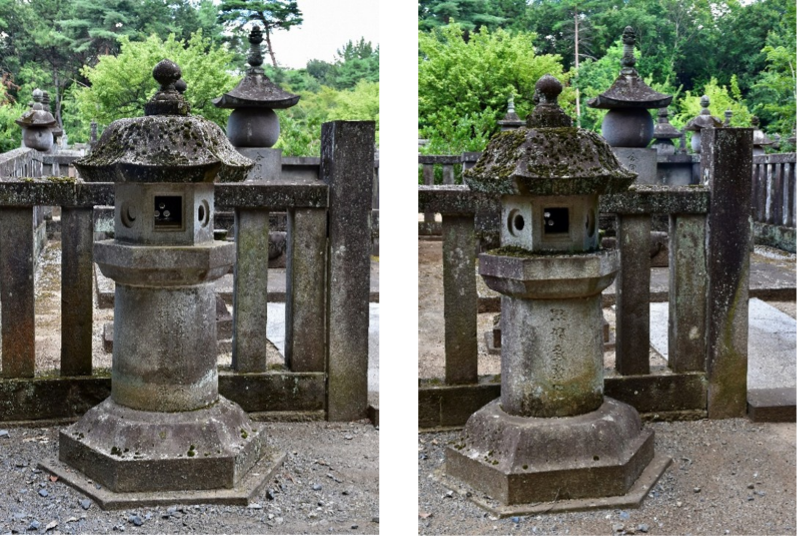
At the entrance to the grave of Masatoshi Okochi stand two stone lanterns, inscribed “RIKEN Konzern (RIKEN Industrial Group)” (right) and “KAKEN, or Scientific Research Institute Ltd.” (left). © Kinpozan Heirinji
After World War II, due to the policies of the GHQ (General Headquarters of the Supreme Commander for the Allied Powers), the RIKEN Konzern was dismantled. However, the research system and industrial collaboration model that Ōkōchi built deeply influenced postwar science and technology policies and the management of research institutions in Japan. Even after his death in 1952, he is regarded as an important figure in Japan’s modern history as a bridge between science and industry.
At Heirinji Temple, the graves of these two great men stand side by side. It is not difficult to imagine that the origin of Ōkōchi’s pioneering spirit lies in his ancestor Nobutsuna Matsudaira.
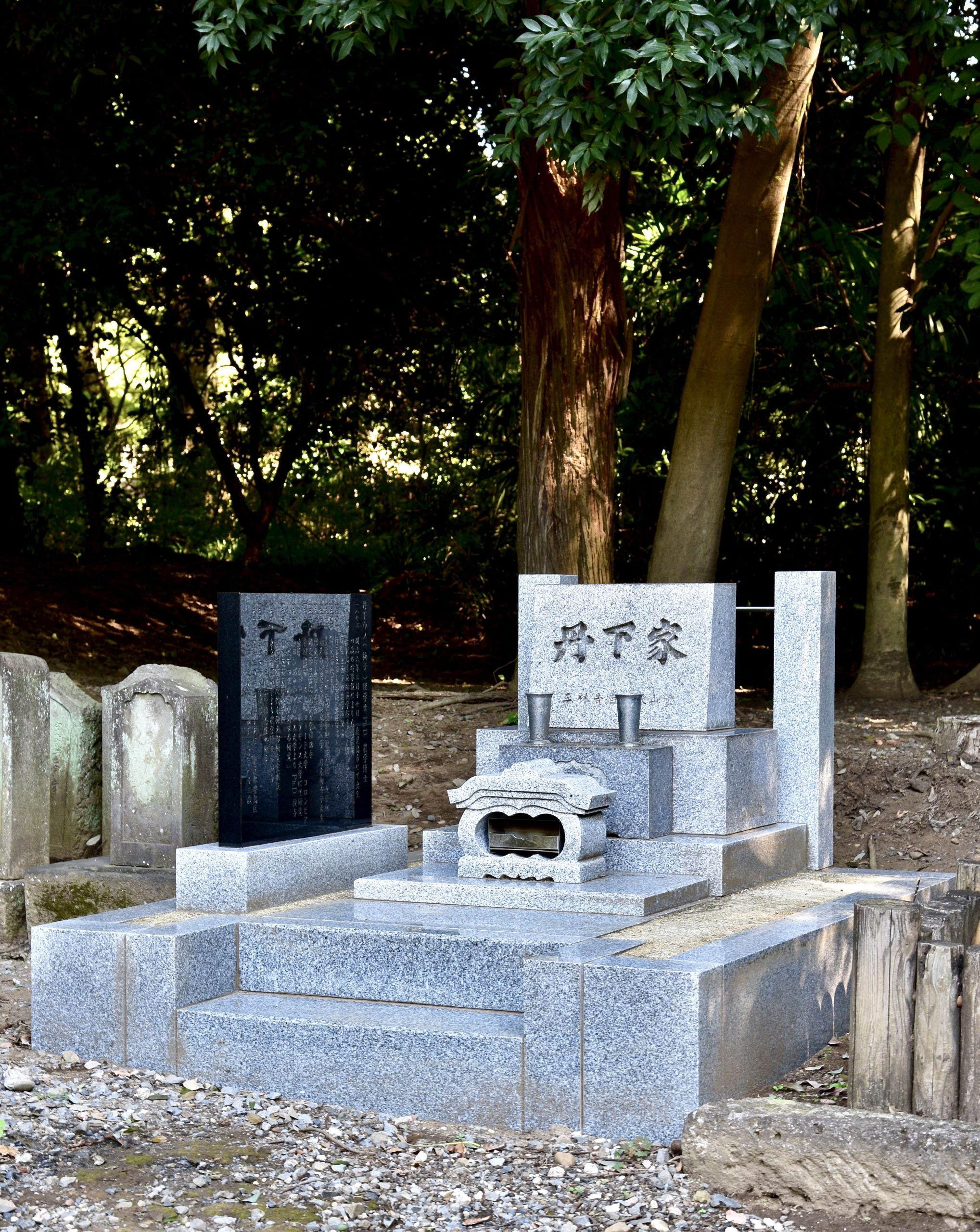
The grave and monument of honor of Ume Tange © Kinpozan Heirinji
Also at this temple are the grave and monument of Ume Tange, one of the first three women admitted to a Japanese Imperial university. Tange earned her PhD in chemistry from Johns Hopkins University in 1927 and is one of the first Japanese women awarded a doctorate in any science. Tange returned to Japan to teach and do further research at RIKEN, studying vitamins, especially vitamin B2. In 1940, she gained a second doctorate in agricultural science from Tokyo Imperial University (now the University of Tokyo).
If you visit Heirinji Temple, known for its beautiful autumn foliage, we hope you will take a relaxing walk through the vast temple forest, visit the graves of Masatoshi Ōkōchi, Nobutsuna Matsudaira, and Ume Tange, and reflect on their spirit.
Special thanks to Heirinji Temple for contributing to this article! (Kinpozan Heirinji official website: https://www.heirinji.or.jp/)
Currently, RIKEN is a national research institute in Japan, but it was originally founded as a private research foundation in 1917, called the RIKEN Foundation. In 1921, Masatoshi Ōkōchi (1878–1952) became its third president , and for over 25 years greatly contributed to both the development of RIKEN and the modernization of Japan’s efforts in science and technology. He adhered to the principle of pursuing academic research and applying it to society. It’s nice to think that this principle ran in his family.
Sanmon Gate of Heirinji Temple © Kinpozan Heirinji
Nobutsuna Matsudaira (1596–1662), known as Izu-no-Kami Nobutsuna, was a fudal daimyo (hereditary vassal lord) in the early Edo period and an excellent politician who was active in the core of the Tokugawa shogunate. When he succeeded his father Masatsuna Matsudaira as the lord of Kawagoe Domain, he became the governor of territories worth more than 100,000 koku, or 15 million kilograms of rice. Serving under the third shogun Iemitsu Tokugawa and the fourth shogun Ietsuna Tokugawa, he led the shogunate government as an elder (roju), earning the nickname “Chie Izu” (Wise Izu) for his strategic brilliance.
The seated statue of Nobutsuna Matsudaira, known as “Chie Izu” (Wise Izu). © Kinpozan Heirinji
Nobutsuna devoted his efforts to flood control and agricultural development. One of his most famous projects was the construction of the Nobidome Aqueduct Irrigation Canal, which diverted water from the Tamagawa Aqueduct and irrigated the Kawagoe domain. The canal flows through present-day Higashikurume City in Tokyo and Niiza City. It was completed around 1655 with the cooperation of the shogunate via Nobutsuna’s command. The Nobidome Canal was not only important as a conduit for agricultural water but contributed greatly to the development of new rice fields and regional growth in the suburbs of Edo.
Here’s another episode. There was a high-ranking Buddhist monk named Tenkai, who served as the 27th head priest of Kita-in Temple, a Tendai Buddhist temple located in Kawagoe. He acted as a political advisor to the Tokugawa shogunate, serving three successive shoguns: Tokugawa Ieyasu, Hidetada, and Iemitsu. The Tokugawa family greatly relied on him. In 1638, when Kita-in was destroyed by a fire, Tokugawa Iemitsu ordered that part of Edo Castle be relocated to Kita-in to aid in its swift reconstruction. This order was carried out by Nobutsuna, Iemitsu’s right-hand man.
Nobidome Yosui (Aqueduct) Irrigation Canal © Kinpozan Heirinji
At that time, it was not possible to transport large timber over land, so the Shin-Kashi River was built up to raise its water level, allowing the materials to be transported by boat. This event marked the beginning of active river transportation between Kawagoe and Edo, facilitating the movement of people and goods. Kawagoe prospered so much that it was said, “When merchants from Kawagoe go to Edo, the rice market shifts.”
Even more that 350 years after Nobutsuna’s death in 1662, his achievements are still highly regarded. He is remembered today as a notable politician who played a major role in establishing the early political system of the shogunate and as a figure who contributed to local society through public works.
Masatoshi Okochi © RIKEN
Nobutsuna’s pioneering attitude and devotion to Japanese society lived on in Ōkōchi along with an interest in science, physics in particular. Ōkōchi grew RIKEN into a core institution of scientific research in Japan and established a unique research system connecting science and industry. One of his greatest initiatives was introducing a system designed to promote innovative basic research by granting researchers who lead laboratories the title of Chief Scientist, thereby increasing their autonomy in selecting research themes and content, and giving them discretionary authority over research funds and facilities.
Chief Scientists took responsibility for their own research themes and could conduct research independently, dramatically improving the quality and quantity of RIKEN’s research output. This fundamental concept remains a core value at RIKEN and Chief Scientists still exist in their original capacity within RIKEN’s Pioneering Research Institute.
Additionally, Ōkōchi promoted the formation of the RIKEN Konzern (RIKEN Industrial Group) , which commercialized technologies and inventions born at RIKEN. He actively advanced the practical application of science and technology and industrial promotion. His efforts to utilize patents and establish a cyclical research system that research outcomes to industry had a significant impact on the development of modern science and technology in Japan.
At the entrance to the grave of Masatoshi Okochi stand two stone lanterns, inscribed “RIKEN Konzern (RIKEN Industrial Group)” (right) and “KAKEN, or Scientific Research Institute Ltd.” (left). © Kinpozan Heirinji
After World War II, due to the policies of the GHQ (General Headquarters of the Supreme Commander for the Allied Powers), the RIKEN Konzern was dismantled. However, the research system and industrial collaboration model that Ōkōchi built deeply influenced postwar science and technology policies and the management of research institutions in Japan. Even after his death in 1952, he is regarded as an important figure in Japan’s modern history as a bridge between science and industry.
At Heirinji Temple, the graves of these two great men stand side by side. It is not difficult to imagine that the origin of Ōkōchi’s pioneering spirit lies in his ancestor Nobutsuna Matsudaira.
The grave and monument of honor of Ume Tange © Kinpozan Heirinji
Also at this temple are the grave and monument of Ume Tange, one of the first three women admitted to a Japanese Imperial university. Tange earned her PhD in chemistry from Johns Hopkins University in 1927 and is one of the first Japanese women awarded a doctorate in any science. Tange returned to Japan to teach and do further research at RIKEN, studying vitamins, especially vitamin B2. In 1940, she gained a second doctorate in agricultural science from Tokyo Imperial University (now the University of Tokyo).
If you visit Heirinji Temple, known for its beautiful autumn foliage, we hope you will take a relaxing walk through the vast temple forest, visit the graves of Masatoshi Ōkōchi, Nobutsuna Matsudaira, and Ume Tange, and reflect on their spirit.
Special thanks to Heirinji Temple for contributing to this article! (Kinpozan Heirinji official website: https://www.heirinji.or.jp/)